
Edition Sixty Six
An interview with søren k. harbel from @harbel

Photography is a popular subject.
I haven’t done any searches for photography related newsletters on Substack. If I had to guess an amount I would say ‘quite a lot’. From digital to film. If you’re curious about a type of photography you will find it on Substack.
If you’re looking for more thought provoking ideas around photography - you have to read søren’s newsletter. From chairs, lighthouses and stripes his newsletters touch on interesting topics and he adds his unique insights.
And now onto the meat and potatoes…
Søren, first I want to say thank you for agreeing to the interview. To anyone unfamiliar with your photos and your writing, please give us a short introduction. Who you are, when you started taking photos, why you’re still taking photos and why Substack as your platform of choice for sharing your insights?
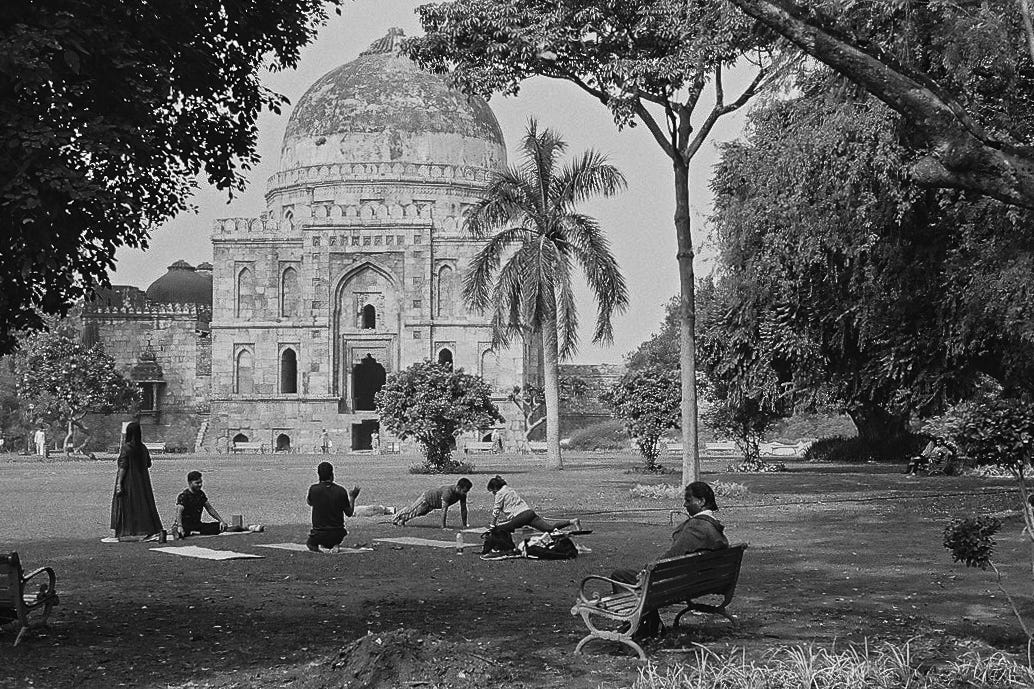
Thank you for asking me to do this with you! My name is Søren. I have lived, worked and travelled across Europe, Asia and North America for many, many years. I have finally settled down in the Basque Country. I started making photographs in a more deliberate way about 35 years ago, after Art History at university and discovering I cared more for photography than Renaissance painting. This is also the time when I made the decision, I would let others make the postcards and I would do something different. It is when I turned to b+w.
Why Substack? That is easy; I like it here. I have made friends here. I love the community and the positive attitude. I think of Substack as my extended family. I am not active on any other social media platforms. I do have a website, but it needs some serious help!
What is the most read photobook which you have and why do you enjoy returning to it?
The book is quite recent: ‘Postcards from Paris’. It contains photographs by André Kertész, which he printed himself and sent back to friends and family in Hungary as postcards, soon after he arrived in Paris. It is a wonderful book. His postcards are reproduced in actual size. Most are now iconic. I find there is a tactile, relaxed, relationship with a photograph that you can handle. Like a photograph of someone you love having a permanent place in your wallet. The corners are soft, there may be a scratch, or two. Masao Yamamoto makes photographs like this. It is utilitarian. I keep taking the Kertész book down from the shelf and leafing through it. There are many others, but it is the current favourite.
Who would you consider to be some of your biggest influences when it comes to your photographic journey?
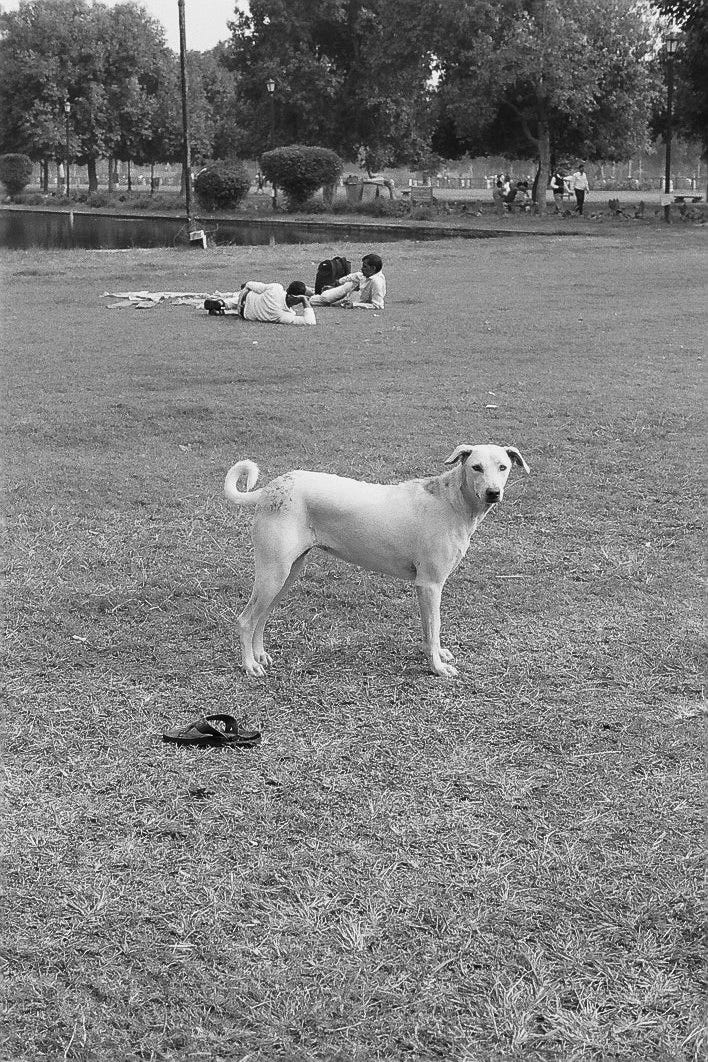
I love good humour in a photograph. When timing, execution, technical skill and a great eye come together. Elliott Erwitt was the master. I love Kertesz, as I have mentioned above for his observational skills, always perfect composition, and beautifully executed photographs.
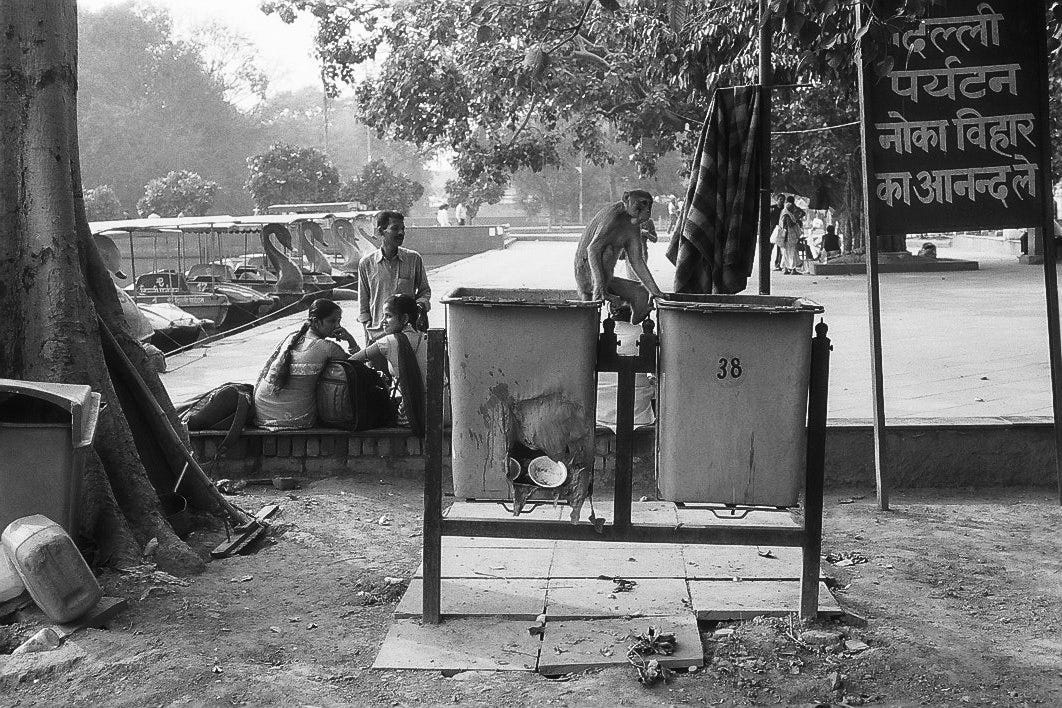
There is Koudelka. A perfectionist. A little OCD, I think. His ‘Horse Whisperer’ is one of the best photographs of all time. Eugene Smith’s work in Minamata. His Pieta is exquisite, and so important. I know! I know… all men, so let me add Abigail Heyman. Lisette Model, Germaine Krull and Helen Levitt. These women, I grew up with. They shaped me. At the feminist university I attended, my true journey into photography began with a class called “Female Photographers of the 20th Century”. It was awesome! I am forever grateful for that class, and the photographers in it. I still love their work!
When a cell phone camera in the hands of an anonymous witness can replace professional photojournalism, it is tough to be a photojournalist. - You wrote this in one of your newsletters. What are your thoughts on the abundance of cameras available to capture almost anything at any time in the world? Would you consider it a good or bad thing for photography as a whole? Delete it completely or find a way to co-exist with it?
I don’t really have an opinion beyond my usual rant about being present. Decide if you are on a trip, walking around, or going to a gallery, or whether your phone is. I just walked Paris Photo this week and the number of phones that walked 18 inches ahead of their owners was utterly depressing. How can you appreciate a great print of a great image through your phone?? To me a photograph is as much about the image, as about the way it is printed, the paper it is printed on, even the way it is framed. I think perhaps a good way to think about photographs is as objects. I don’t care if the source is an 8x10 negative from a mahogany treasure, or a file from a cellphone. Show me a print!
An interesting perspective - I’ve been making small A5 size prints for small photo albums and holding a physical copy of one of my photos makes me think about it differently. Do you think printing photos should be something to start doing as early as possible to help improve one’s photography?
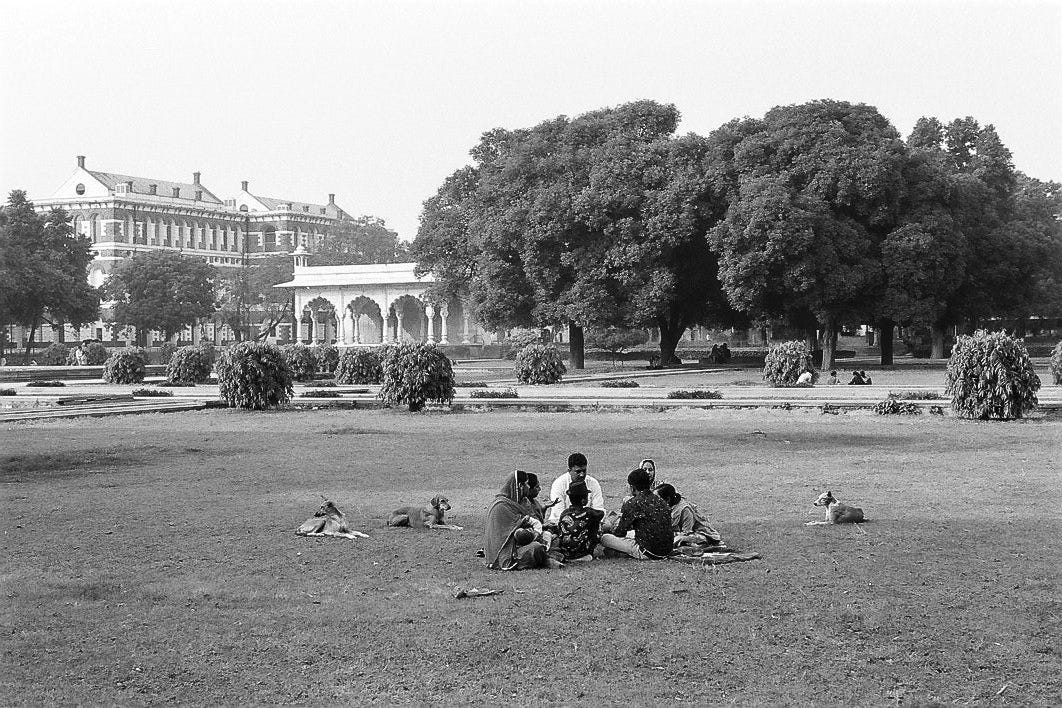
Making prints is fun. I understand it may not be for someone, who lives more virtually, but I think it is the tactile nature of a photograph that makes it real. I do think you have a different relationship with a printed image, and see it very differently when you hold it in your hands. I have been sequencing recently. I did it virtually first. Then on the floor with prints. This was two completely different experiences. Walking around, looking at photographs from the side, above, etc. It is just a different thing. Cartier-Bresson - love him, or hate him - notoriously told new applicants at Magnum to only bring their contact sheets. He would view them upside down to understand each photographs graphic elements, balance, tonal range, regardless of what subject was in the frame. I think prints are a little like that. Turn them, tip them, even look at them upside down. It all helps you make better pictures.
Social media did a number on us. From the way we share images to gain some form of admiration to how we capture images with this in mind. What do you think about photographers using social media?
I think we all make our own bed, so to speak. I cannot keep up with Substack and a website. I try, but I cannot read and enjoy as many posts, as I would like to. I do not understand how anyone can handle all the various platforms and do a reasonable job on any of them. There is just not enough time. I want to be out photographing and not tied up in a knot on the couch, praying someone likes my photograph of the pretzel I just ate.
I do think that if you are on the commercial end of photography, and need to make a living selling your work, it is an entirely different proposition. You then have to keep up with the Joneses online, and I am sure that is a lot of work. I am glad I don’t have to do that!
Your bio has a word with endless potential in it: FILM. Can you tell us about what you’re shooting at the moment, favorite film and do you ever shoot digital?
I am a simple guy. I use one camera, one lens, one film. It is how I have photographed for 30-plus years. It will not change. I have learned to understand how my choice of camera/lens/film behaves, and I think I can reasonably predict what is possible and what is not. That is the way I like it. I have not and will never photograph with a digital camera, aside from my phone when I need to document something quickly. But, honestly, I don’t really think of those images as photographs. They are record keeping for me.
My film is FP4, if that matters. What am I shooting? I subscribe to being in the moment and seeing. And if something strikes my fancy, I photograph it. I will then forget about it and move on to the next one. I have zero discipline! But, with film, you get three kicks at the can. One when you make the image. Two when you look at the neg. Three when you print it.
The film community keeps growing - to me film photography feels like a breakaway from the digital and everything which comes with it: pushing to publish, rushing to get the perfect shot. Would you recommend a photographer dip their toes in the film photography pool at least once to get an understanding (and appreciation) for the process involved when it comes to shooting film?
I think film makes you look slightly differently at your choices and decisions because you have the practical challenge of having to rewind, reload and in that lose a bit of momentum, so you think a little differently, perhaps. I think to understand any craft, you have to understand the basics. I wrote recently somewhere that Picasso learned to draw (masterfully) and then paint likenesses (masterfully) and having done so, he could ditch the rules and paint like Picasso. I am not here to tell anyone what to do, but I think having a go with a 35 mm film camera is a good thing. Who knows where it might take you....
The photography community on Substack is a very vibrant one with something for every type of photographer - what has your experience been within the community?
I truly enjoy the community I have found here on Substack. I like the comments back and forth. Often comments with perspectives I had not considered. There is a great camaraderie here. The tone is good. I get the impression that if you have nothing nice to say… shut up. And I like that. There is enough trouble in the world without personal attacks and negativity that can strip wallpaper.
To close out the interview - do you have any favorite reads on Substack (or elsewhere) which you would like to share with the readers?
That is a very difficult question. There are so many who deserve to be mentioned here, but I would be mortified if I forgot one, so perhaps the best I can say is go have a look on my homepage here on Substack and see who I read. That should give you good insight into what I enjoy, and think is worthy of your time. Let me end with a big shout-out to those who read my posts and ‘Photobook Sundays’. I hope I will be able to keep up with those who I read and enjoy sharing comments with. Substack is a great place to be, and I hope it will remain so for a long time.
In closing.
Søren’s photos and newsletters are a way to expand horizons. To learn more about different photographers. To learn more about photography in ways which go beyond technical aspects. If you’re uncertain about this, open his Substack and read any of his newsletters - you’ll thank me later.
Thanks for reading : )
Richard, you have made me look good. Thank you for reaching out! I am full of humbility (and yes that is a word, because I have used for years and I like it!).
nobody does substack like soren! his knowledge about photography, moments in history is priceless.